Choosing a Heavy-Duty Suction Hose: Pump, Vacuum and Diameter Guide
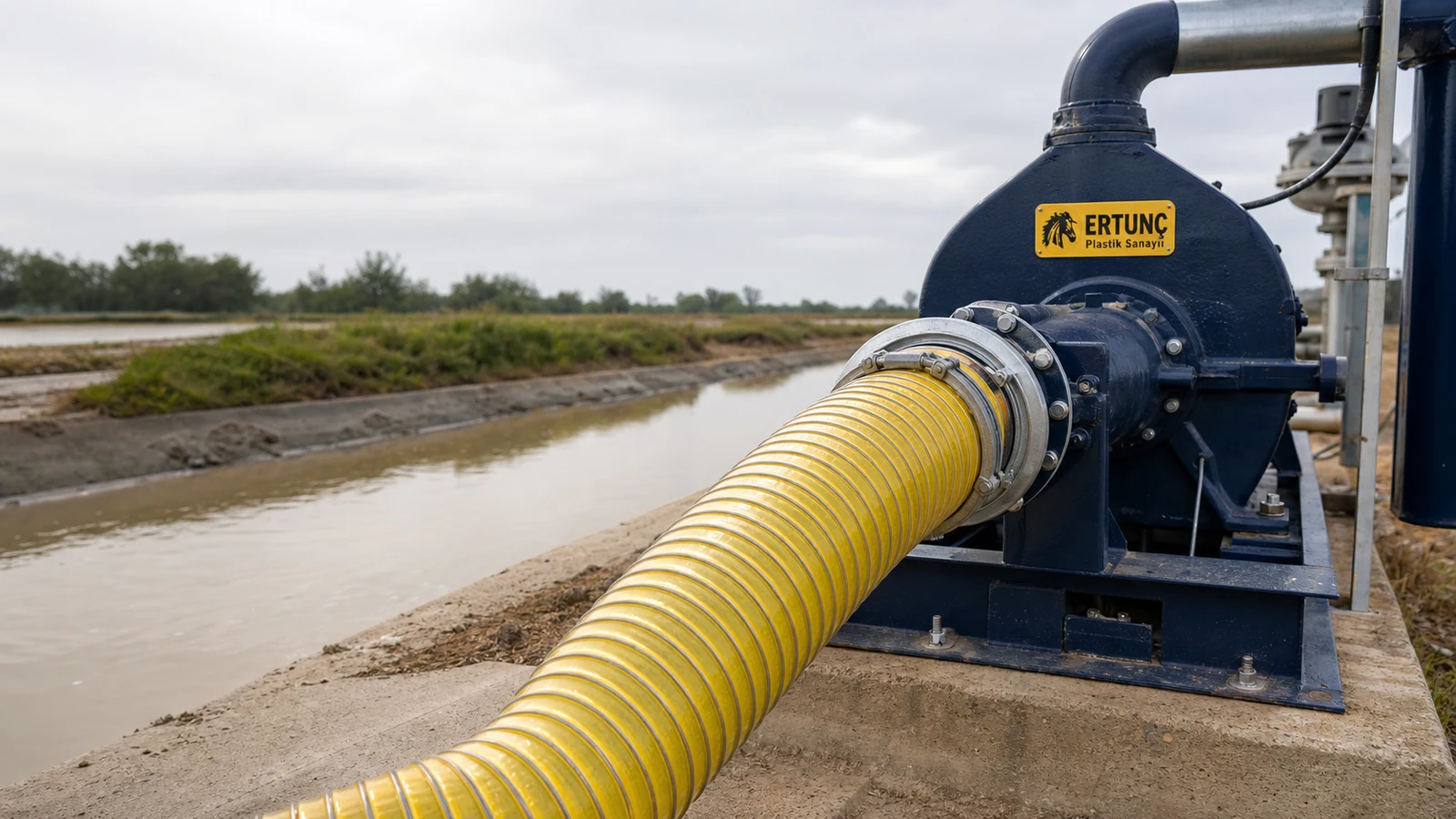
Heavy duty suction hose works in lines where the pump draws water or another fluid from the source. Unlike the discharge hose, negative pressure and vacuum resistance stand out in this line. Not every “thick looking” hose is suitable for high vacuum; spiral structure, weight, inner diameter, bending radius and fluid information should be evaluated together.
Explore the relevant options: Heavy-Duty Yellow Suction Hose · Heavy-Duty Green Suction Hose
What is the difference between suction hose and discharge hose?
The suction hose must withstand vacuum and collapse at the inlet of the pump. The discharge hose carries positive pressure at the pump outlet. Using an inappropriate discharge hose in the suction line may cause collapse, decreased flow rate and air leakage.
spiral and suction hose family When examining, be sure to check the “suction”, “discharge”, vacuum or pressure declaration of the product.
Why are vacuum and negative pressure critical?
During pump suction, the internal pressure of the hose may drop below atmospheric pressure. If the hose wall is not sufficiently supported, it will ovalize or collapse. Steel wire/spiral reinforcement and thick wall contribute to vacuum resistance; However, the exact value should be taken from the product technical sheet.
Diameter, length and pump suction head
As the inner diameter decreases, suction loss may increase. As the hose gets longer, friction loss increases. As the pump rises above the water surface, the usable suction head decreases. If these three values are not evaluated together, it may seem as if the pump is releasing air or the water is coming out late.
| Check | Effect on suction line | Practice question |
|---|---|---|
| Inner diameter | Flow area and head loss | What is the pump opening and target flow rate? |
| Length | Friction and air ingress risk | Are there unnecessary meters? |
| Height | Required suction energy | Where is the water level relative to the pump? |
How to find a leaky suction line?
- Turn off the pump and check all connections and clamps.
- Look for cracks, hardening and spiral separation in the suction hose.
- Check that the strainer, flap and gasket are in the correct direction.
- Follow the procedure for filling the pump body with water.
- Observe whether the flow starts without bubbles at low speed.
- If air persists, perform a service test by isolating the line piece by piece.
Purchasing checklist for heavy suction hose
- Fluid: clear water, muddy water, chemical or other liquid
- Pump inlet diameter and target flow rate
- Vacuum/negative pressure value
- Operating temperature
- Inner diameter, outer diameter, weight and spiral type
- Minimum bending radius
- Roll length and terminals
Are Colour, Weight and Spiral Reinforcement Enough to Choose a Hose?
No. Yellow, green or transparent appearance alone does not indicate product class. Heavy duty selection is made with vacuum, pressure, wall structure, fluid and connection data. spiral hose diameter and vacuum guide Also add it to the comparison.
Related products, dimensions and technical guides
Frequently Asked Questions
We answer 20 common questions about choosing a heavy-duty suction hose, with practical details on pumps, vacuum conditions, diameter and product selection.
What is the heavy suction hose used for?
It is used to draw water or suitable fluid from the source at the pump inlet. Vacuum and collapse resistance are important.
Are the suction hose and the discharge hose the same?
No. The suction hose is designed for negative pressure and the discharge hose for positive pressure.
How many mm should the pump suction hose be?
The pump port is determined according to the target flow rate, line length and loss calculation. You don't just look at the pump label.
Will the heavy suction hose withstand vacuum?
If there is a vacuum/negative pressure value in the product's technical sheet, it should be used within that limit. Thick appearance alone is not evidence.
Why does the suction hose collapse inwards?
The vacuum value may be insufficient, the hose may be crushed/aged or the pump suction may exceed the product limit.
Why does the pump suction line create air?
Loose clamp, crack, incompatible gasket, low water level, line height or valve problem can cause air leakage.
What is the use of a spiral in a suction hose?
By supporting the wall, it can reduce the risk of ovalization and collapse in the vacuum. Exact performance depends on product value.
What is the difference between yellow suction hose and green suction hose?
Color class alone does not explain. Diameter, weight, vacuum, temperature and fluid compatibility should be compared.
Which suction hose to use in muddy water?
A heavy-duty product suitable for wear, solid particles and vacuum conditions should be selected. Fluid and particle information must be provided at the time of bidding.
How many meters should the suction hose be?
Unnecessary length can create friction loss and air risk. Source–pump distance and service margin should be measured.
What happens as the pump suction height increases?
Required suction energy and loss may increase; pump operating point and cavitation risk should be checked.
Why is bend radius important in suction hose?
Sharp bending can narrow the inner cross-section and strain the spiral and the wall. The minimum radius of the product must not be exceeded.
How to distinguish cavitation from air leakage?
In cavitation, pump inlet pressure and flow conditions are inadequate; In case of an air leak, air enters through the connection or hose. In both cases, the pump must be stopped and service checked.
What does the suction hose flap do?
It can help the line retain water and refill the pump; The direction and size must be appropriate.
How to choose suction hose clamp?
A clamp is selected that is suitable for the outer diameter of the hose, is resistant to corrosion, and has a clamping range that will not cut the hose.
Does the heavy suction hose carry hot water?
The temperature limit should not be used without verification from the product technical information.
Is the suction hose chemical resistant?
The chemical structure and concentration of the fluid should be asked to the manufacturer; Water hose does not imply chemical compatibility.
Can the vacuum truck suction hose be used in pump suction?
Fluid, vacuum, wear and connection conditions can be evaluated if appropriate; The product declaration must be verified in writing.
How does the price of heavy suction hose vary?
Diameter, weight, spiral/reinforcement, vacuum value, roll length and fluid compatibility may affect the price.
What information should I share for the quote?
Type the pump model, suction head, target flow rate, hose length/diameter, fluid, temperature, and connection type.
Related Products and Sizes
Jump directly to the relevant product family, measurement sheets and complementary technical guides.
Let's Choose the Right Product Together
Share application, diameter, length and delivery information.