19 questions and answers covering size, use, technical checks and quotations.
What do PN and ATÜ mean?›
PN and ATÜ identify the nominal pressure class used when specifying pipe. Select the class by considering operating pressure, the pump, elevation change, run length and pressure surges together.
Should I choose 6 ATÜ, 10 ATÜ or 16 ATÜ pipe?›
Do not choose by the highest number alone. Compare actual line pressure, outside diameter, wall thickness, pump behaviour, design margin and project requirements; use the current technical table for critical applications.
What is the difference between PE100 and PE32?›
PE100 and PE32 are different material grades. Pressure class, density, wall thickness and intended use depend on the product family; pipes with the same outside diameter should not be treated as interchangeable based only on their name or colour.
Does the pipe size indicate inside or outside diameter?›
Sizes such as 20, 25, 32, 40, 50, 63, 75, 90 and 110 mm generally refer to outside diameter. Actual inside diameter depends on wall thickness and pressure class; use the current product dimensions in flow calculations.
How is a polyethylene pipe diameter selected?›
Calculate the required flow, run length, elevation change, number of simultaneous outlets, pump or supply pressure and connection sizes together. Simply matching an existing tap diameter may not suit a long run.
How much water can a 32 mm pipe carry?›
Capacity is not determined by the 32 mm outside diameter alone. A reliable flow estimate requires the inside diameter, pipe class, length, pressure, elevation and allowable velocity; use a project calculation or the pipe sizing calculator.
How do I choose a polyethylene pipe connection?›
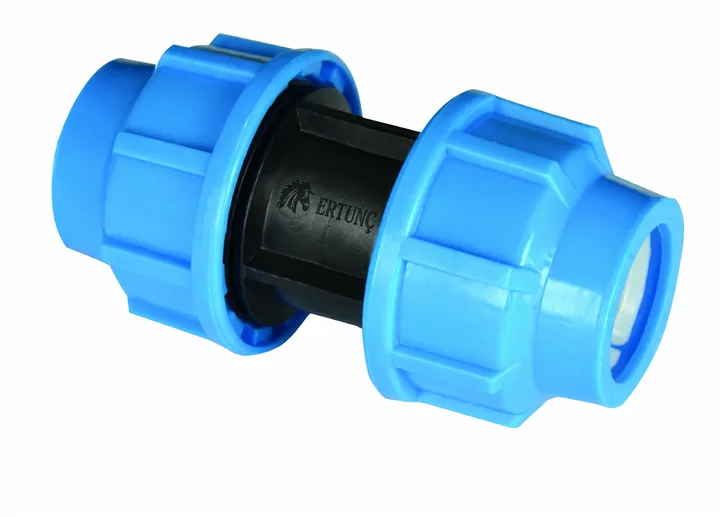
The fitting must suit the pipe's actual outside diameter, pressure class and operating conditions. Suitable mechanical fittings can be considered for small and medium diameters; for engineered lines, follow the manufacturer's specified joining method.
Should polyethylene pipe use mechanical couplings or electrofusion?›
The method depends on diameter, pressure class, whether dismantling is needed, site conditions and project standards. Prepare mechanical connections according to their instructions; electrofusion and butt fusion require suitable equipment and competent procedures.
What determines the price of 100 metres of polyethylene pipe?›
Price depends on the product family, PE grade, outside diameter, 6/10/16 ATÜ class, total or coil length, quantity, fittings and delivery terms. Different grades of the same colour or diameter should not be assumed to cost the same.
How long is a coil of polyethylene pipe?›
Coil length can vary with diameter, product family, production option and delivery plan. State the total length, preferred continuous coil length and delivery city, and confirm the available pack length when requesting a quote.
How do blue, black, white and light-blue pipes differ?›
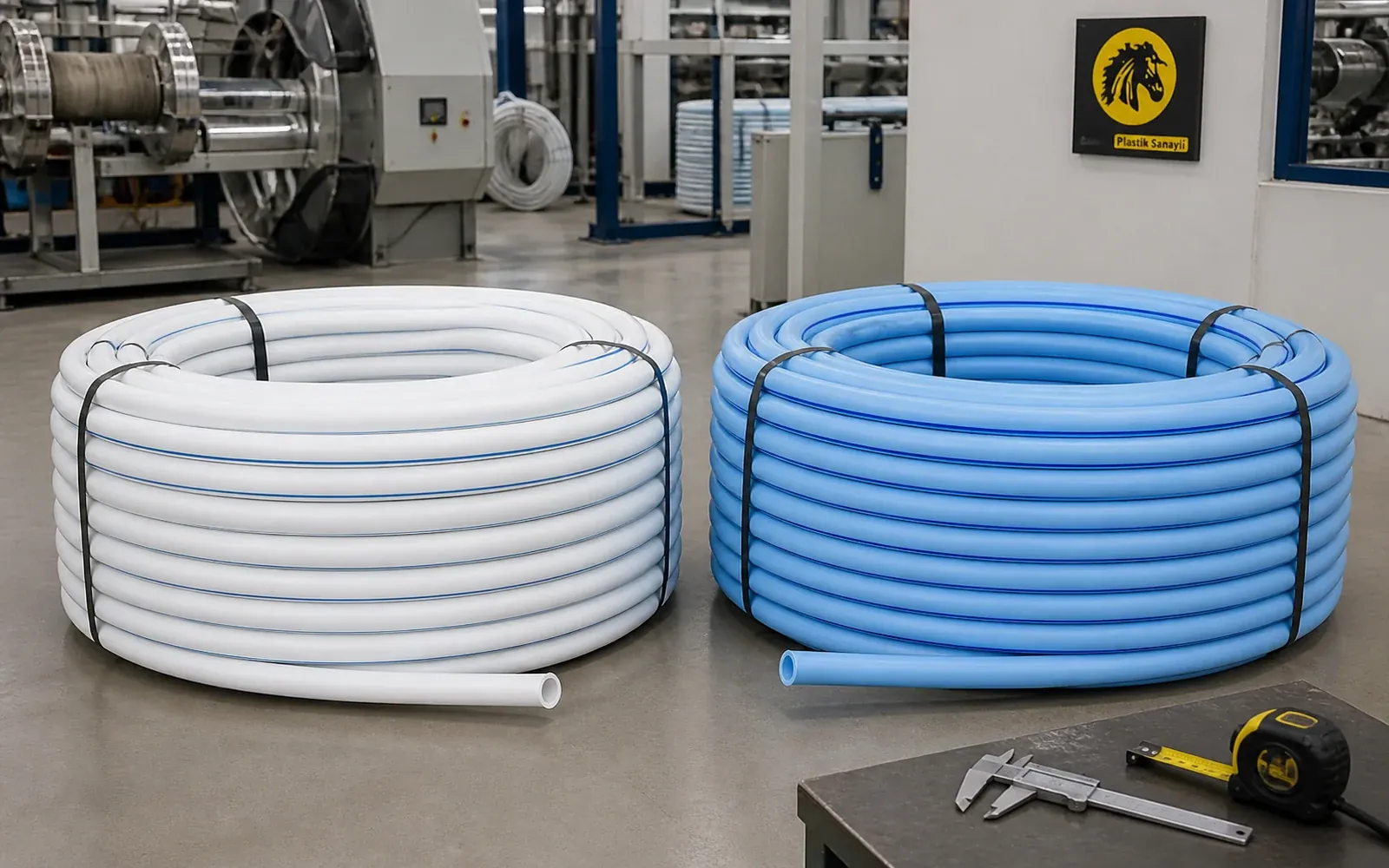
Colour helps identify pipes on site, but does not by itself prove quality, pressure class or suitability for drinking water. Check the material grade, pipe marking, outside diameter, ATÜ class and current manufacturer declaration together.
Can white or light-blue PE32 pipe carry drinking water?›
Do not infer suitability from colour or the PE32 name alone. Verify the ordered product's current conformity documents, manufacturer declaration and the project's drinking water requirements together.
How should polyethylene pipe be buried?›
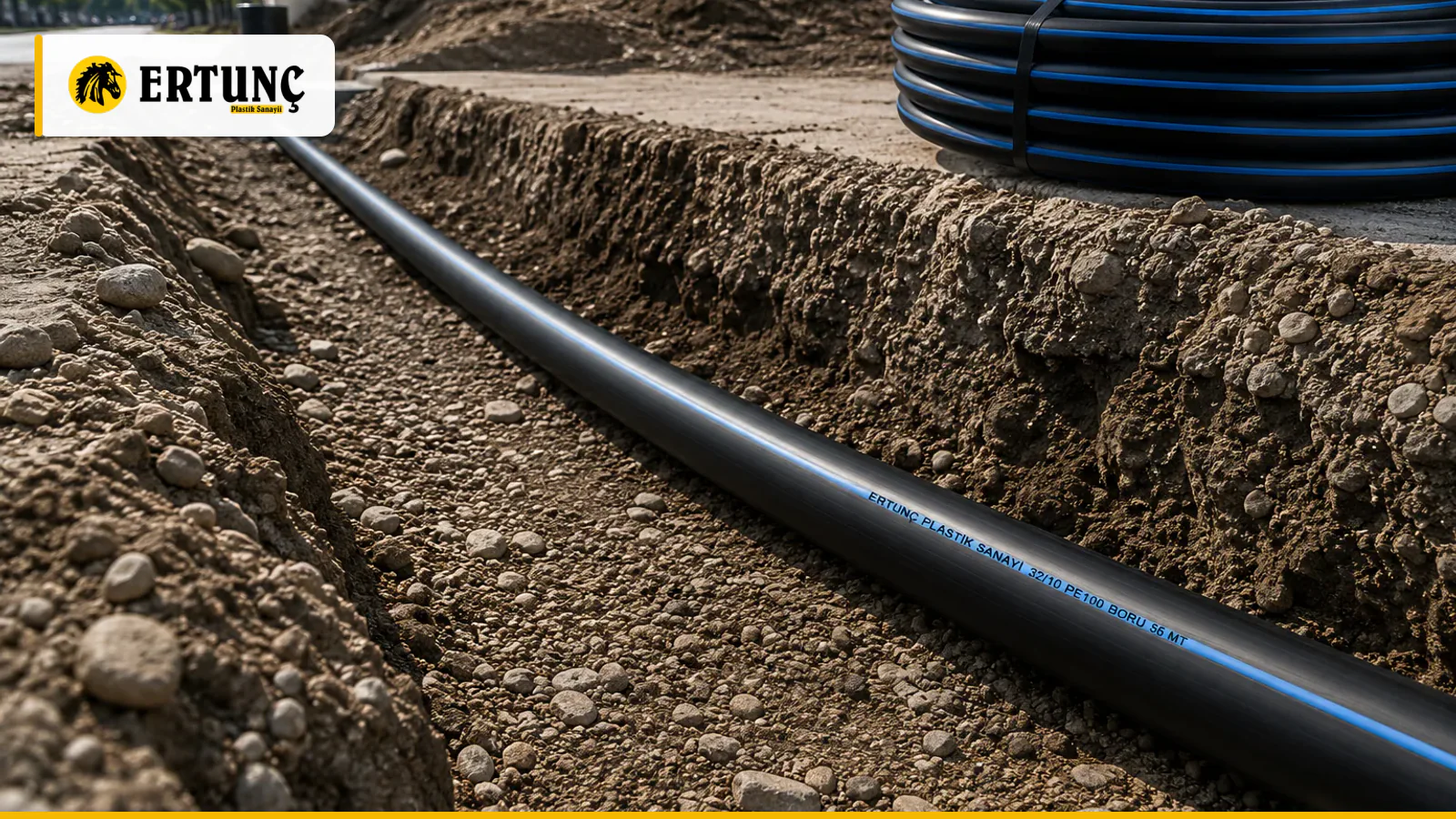
Prepare the route, bedding, backfill, bending limits, mechanical protection and connection points to the project specification. Protect the pipe from sharp stones, crushing and bends tighter than its permitted radius.
What should I check for polyethylene pipe exposed to sunlight?›
Check the current UV and outdoor-use declaration for exposed installations. Do not assume a fixed service life without considering sunlight, impacts, crushing and temperature extremes together.
How are SDR, PN and ATÜ related for PE100 pipe?›
SDR is the ratio of outside diameter to wall thickness; PN and ATÜ describe nominal pressure class. They are not interchangeable values and should be read together in the same product's technical table.
What details should a polyethylene pipe order or quote request include?›
Provide colour, PE grade, outside diameter, 6/10/16 ATÜ or PN class, total metres or coil quantity, application, fitting needs, delivery city and target date. This helps reduce wrong-size orders and incomplete deliveries.
Is a 32 mm polyethylene pipe measured inside or outside?›
The 32 mm designation is the nominal outside diameter. Actual inside diameter is the outside diameter minus twice the wall thickness. Pipes with the same outside diameter but different wall thicknesses do not have the same flow area.
Can I tell the pressure class from a white or light-blue pipe's colour?›
No. Colour alone is not evidence of material grade, pressure class or drinking water suitability. Check the pipe marking, material declaration, ATÜ/PN class and scope of the supporting documents together.
How many metres of pipe are needed for a 1,000 m² field?›
Area alone is insufficient. The calculation needs length and width, row direction and spacing, end margins, the main line and distance from the water source. Use the area and pipe-length calculator; its result does not establish a suitable diameter or pressure class. Open the calculator


 Guide
Guide