How to Install Polyethylene Pipe Underground

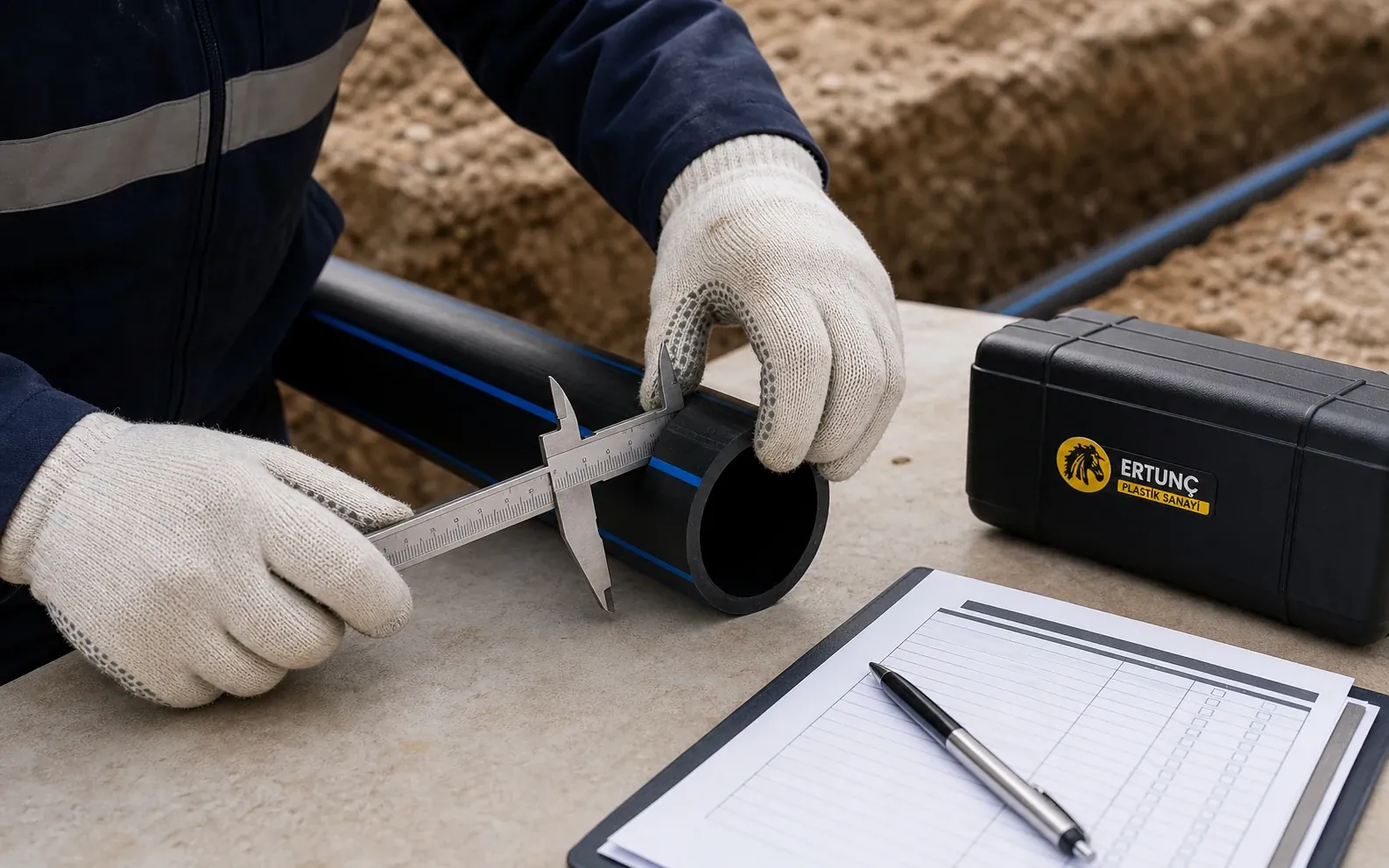

Burying the polyethylene pipe in the ground is not just about opening a trench and covering the pipe. Pipe class, route, ground, bedding, connection, filling and commissioning steps should be planned together.
Explore the relevant options: Compare coiled-pipe sizes and classes · How to Connect Polyethylene Pipe: Step by Step
Brief summary of polyethylene pipe laying
For underground polyethylene pipe, first establish the application, diameter and pressure class. Then check existing utilities, mark the route and prepare a trench and bedding suited to the ground conditions.
The pipe is laid without bending sharply, the connections are made according to the manufacturer's method, the line is checked before filling and the application record is kept. Depth, padding and protection details are not the same at every site; The project should be determined according to ground, frost, traffic and local conditions.
How to choose the right pipe before laying?
Drinking water, agricultural irrigation, garden line and mains may not require the same product and pressure class. The diameter should be selected not only according to the existing connection, but also with the required flow rate, line length, elevation difference and working pressure.
Price or color alone should not be used when deciding between PE100 and PE32 or 6, 10 and 16 ATÜ. The current declaration of the product, the connection method and the operating condition required by the project must be verified.
How to check the route and existing infrastructures?
Before excavation, the location of electricity, natural gas, sewage, communication and existing water lines should be learned. The route should not pass under building foundations or uncontrolled loads that will make access difficult in the future.
Turning points, connections, valves or additional parts must be entered in the application drawing. If there is a road crossing, vehicle load or other structure impact, the necessary protection method must be determined by the project manager.
How to prepare the trench bottom and pipe bed?
No large stones, sharp pieces or irregular hard protrusions should be left on the bottom of the trench, which would give point load to the pipe. If the base bearing capacity is insufficient or water accumulates, improvement must be made in accordance with the project conditions.
The use of sand or fine material is not a universal rule to be applied to the same thickness in every field. Bedding material and thickness should be determined according to the ground, pipe, load and project specifications.
| Checkpoint | Purpose | Situation to avoid |
|---|---|---|
| Trench bottom | Continuous support of the pipe | Large stone and sharp protrusion |
| Route | Avoid giving unnecessary stress to the pipe | Sudden and tight turn |
| Bedding | Reduce point load | Random fill independent of project |
| Water control | Keeping the pipe bed stable | Uncontrolled water accumulation |
How to lay polyethylene pipe into the trench?
The roll should be opened in a controlled manner; The pipe should not be laid by dragging it behind the vehicle or passing it over sharp surfaces. If there are scratches, crushes, curls or inconsistencies in production printing on the surface, the relevant part should be evaluated before connection and filling.
The pipe should not be inserted into tight turns where the natural bend limit is forced. Since the permissible bending condition may vary depending on the product and temperature, current manufacturer information should be taken as basis.
How to plan coupling or welding?
The connection method should be chosen according to the pipe material, diameter, pressure class and the fitting to be used. Surface cleanliness, proper cutting of the pipe, axis alignment and fitting instructions for the fitting are important.
Different product classes or outside diameters should not be combined based on similar appearance alone. After the connection is completed, visual inspection and the line test in the project procedure should be performed before filling.
What to Check During Initial Backfilling and Compaction
The first filling immediately around the pipe must be free of large and sharp materials that will damage the surface. The filler should be placed balanced to support the sides of the pipe.
Heavy compression equipment should not be used directly on the line without protective padding on the pipe and project requirements. The location of warning tape or additional mechanical protection should also be determined according to the project and local application.
Testing and Installation Records Before Backfilling
The line should be inspected before connections, valves and access points are closed. If pressure line testing is required, test pressure, time, temperature and safety steps should not be guessed; The approved project procedure must be applied.
Route, connection points, valve locations, pipe class, diameter and application photographs should be recorded. This record makes it easier to find the line during future maintenance or new excavation.
Frequently Asked Questions
How many centimeters below should the polyethylene pipe be buried in the soil?
There is no single centimeter value valid for all applications. Depth; It should be determined according to frost risk, vehicle or ground load, agricultural activity, pipe diameter, other infrastructures and project conditions.
Is it necessary to put sand under the polyethylene pipe?
It cannot be said to be mandatory in the same way for every ground. However, the pipe must not rest on large stones and sharp protrusions and must be supported constantly. The bedding material and its thickness to be used should be determined according to the project and ground condition.
Which polyethylene pipe or black polyethylene pipe is used underground?
Color alone does not determine usage or quality. Material class, pressure class, diameter, product declaration and intended use of the project should be checked.
Should PE100 or PE32 be selected for the underground water line?
There is no single truth for every project. Line length, pressure, diameter, intended use, connection system and required product documentation should be evaluated. The final decision should be made based on the product declaration and project account.
How to choose 6 ATÜ, 10 ATÜ and 16 ATÜ polyethylene pipe?
The selection of ATÜ is not made just by looking at the number on the pump. Static pressure, elevation difference, working order, sudden pressure changes and class of fasteners should be evaluated together.
Will 32 polyethylene pipe be sufficient for garden irrigation?
Adequacy depends on the desired flow rate, line length, elevation difference, pump and number of outlets operating simultaneously. Just looking at the name 32 mm, it cannot be said to be sufficient for all systems.
Is a protection pipe required when the polyethylene pipe is passed under the road?
Depending on vehicle load, road structure, excavation permit and project requirement, a protective cover or other solution may be required. This decision should not be made as a general rule without seeing the field.
Do stones in the soil damage polyethylene pipes?
Large and sharp stones can cause point loads or scratches on the pipe surface. The trench bottom and initial fill should be prepared considering this risk; The damaged section should be checked before closing.
How to straighten roll polyethylene pipe?
The roll is opened in a controlled manner and no sudden force is applied against its natural curl. The pipe should not be pulled with a vehicle, and the bent section should not be sharply bent in the opposite direction.
With which coupling is the underground polyethylene pipe connected?
The coupling must comply with the pipe material, actual outer diameter, pressure class and manufacturer's instructions. The same nominal name does not mean that every fitting will automatically fit.
Can the polyethylene pipe sit in the sun before being buried?
Temporary storage should be done according to the manufacturer's storage instructions. The pipe must be protected from sharp surfaces, uncontrolled heat, heavy loads and field movement that may damage the surface.
Is polyethylene pipe tested before filling?
In pressurized or critical lines, it is useful to check the connections in accordance with the project procedure at the stage when they are accessible. Test pressure and duration should not be estimated, the approved method should be followed.
Can a warning tape be placed on the underground water pipe?
Warning tape is used in some projects for future excavations. Its color, height and necessity of use should be determined according to local specifications or the decision of the project manager.
Can the polyethylene pipe be turned sharply in the ditch?
No. Sharp turns may create kinks, constrictions, or unnecessary stress in the pipe. The permissible bending condition must be checked according to the current technical information of the product.
How can the polyethylene pipe buried in the ground be found later?
The route, connection and valve points should be measured and recorded in the application plan. Keeping photographs and location records makes it easier to find the line during future maintenance or excavation.
Let's determine the appropriate product and size together
Write the diameter, length, area of use and delivery city; Request a quote with up-to-date product information.