6 ATÜ vs 10 ATÜ vs 16 ATÜ: Which Pressure Class Do You Need?
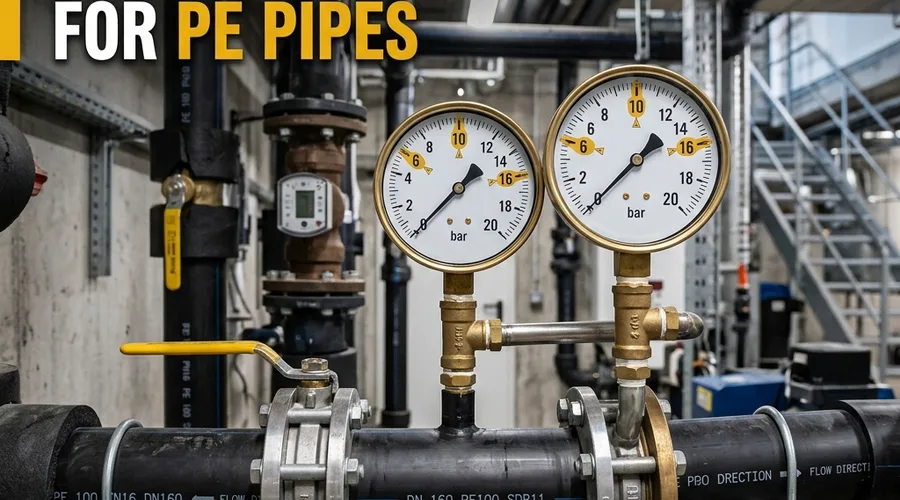
Before Choosing 6, 10 or 16 ATÜ
A PE pipe pressure class cannot be selected from the application name alone. Different pumps, elevation profiles and line lengths can create different conditions in the same garden. Read the material grade, outside diameter, SDR or wall thickness, and manufacturer operating conditions together. A catalogue name does not replace a project suitability check.
Explore the relevant options: Compare coiled-pipe sizes and classes · PE100 Pipe: A Guide to SDR, PN and ATÜ Selection
Distinguishing ATÜ, Bar and PN
For the technical atmosphere unit, 1 at = 98,066.5 Pa = 0.980665 bar. ATÜ is a traditional gauge-pressure notation, while PN is a nominal class designation. Do not use the equality “10 ATÜ = PN10 = 10 bar”. Match the catalogue class to the pipe marking and technical product table.
Pressure-Class Selection Checklist
| Check | Required Information |
|---|---|
| 6, 10 or 16 ATÜ Catalogue Label | Full product code and manufacturer-declared pressure conditions |
| Pipe Geometry | Outside diameter, SDR or minimum wall thickness, and dimensional standard |
| Line Conditions | Maximum operating pressure, temperature, elevation difference and pressure surges |
| Fittings | Compatibility of pipe, couplings, valves and seals as a system |
| Cost Comparison | Quotes for the same family, diameter, class, length and tax basis |
Assess the Pump and Elevation Together
Include the pump pressure at shut-off and transient pressures caused by valve operation in the project assessment, as well as normal duty conditions. Identify the lowest and highest points along the route. A lower-rated fitting may limit the system selection; a higher pipe class does not remove that limitation.
Product and Quotation Selection
Compare blue and black PE pipes using the same outside diameter and verified operating class. For a quotation, provide the product family, diameter, class, total length and delivery destination. State any drinking-water, fire-protection or other special application at the outset; suitability and certification scope require separate assessment.
Technical Sources
Frequently Asked Questions
What Does ATÜ Mean?
ATÜ is a traditional notation for pressure above atmospheric pressure expressed in technical atmospheres. It is not numerically identical to bar, and PN is a nominal class rather than a pressure unit. Verify catalogue terminology against the technical product table.
Where Can a 6 ATÜ Pipe Be Used?
It may be considered for irrigation or water conveyance where the project meets the product’s verified operating conditions. “Garden” or “drip irrigation” alone does not establish suitability; check the pump, elevation, temperature, pressure surges and fittings together.
Where Can a 10 ATÜ Pipe Be Used?
A 10 ATÜ catalogue label is not an application approval. The product can be considered if the line assessment matches its technical capacity. Material suitability and required documentation must also be verified for drinking-water contact or industrial fluids.
When Is a 16 ATÜ Pipe Needed?
Determine the required class by comparing the project’s maximum design conditions with the manufacturer’s product table. A 16 ATÜ label is neither universally required nor necessarily sufficient for every pumped or large project. Include valves, couplings and other components in the assessment.
How Is Wall Thickness Related to Pressure Class?
Assess wall thickness together with material grade, outside diameter, SDR and the applicable dimensional standard. Different material grades and SDR options can have different wall thicknesses at the same outside diameter. A thicker wall reduces the available internal cross-section at the same outside diameter; obtain actual dimensions from the product table.
How Do Prices Differ Between Pressure Classes?
Compare products in the same family and outside diameter using current prices per metre. Geometry and material quantity may change with class; there is no fixed price-difference percentage for every pipe. Compare totals on the same length, tax, fittings and delivery basis.
What Is the Pressure in a Water Main?
Do not assume one pressure value for every water main. Establish the line’s pressure range using utility data and suitable site measurements. Assess booster pumps, elevation changes and transient pressures separately; building storeys alone do not determine pipe class.
What Is a PE Pipe's Burst Pressure?
Burst pressure is a result under controlled test conditions, not the permitted operating pressure. One multiplier of nominal class cannot establish the burst pressure of every PE pipe. Use verified product documentation for operating limits and relevant test results.
How Should a PE Pipeline Be Pressure-Tested?
A competent team should plan testing to the approved design, applicable standard and manufacturer procedure. Pressure, duration, temperature and acceptance criteria are not identical for every line. Account for PE’s time-dependent behaviour; do not apply one pressure-and-duration recipe to every project.
Which Pressure Class Is Required for a Fire Main?
This guide cannot establish a universal minimum pressure class or diameter for a fire main. Follow the fire-system design requirements, authority acceptance criteria and the selected product’s compliance documentation. A water-pipe label does not automatically establish fire-main suitability.
Related Products and Sizes
Jump directly to the relevant product family, measurement sheets and complementary technical guides.
Product and technical guide network
Examine the topic along with product family, measurement and application guides.
Check out our products
Discover the hose and pipe products that suit your needs.