Spiral Hose Diameter Selection and Pump Guide
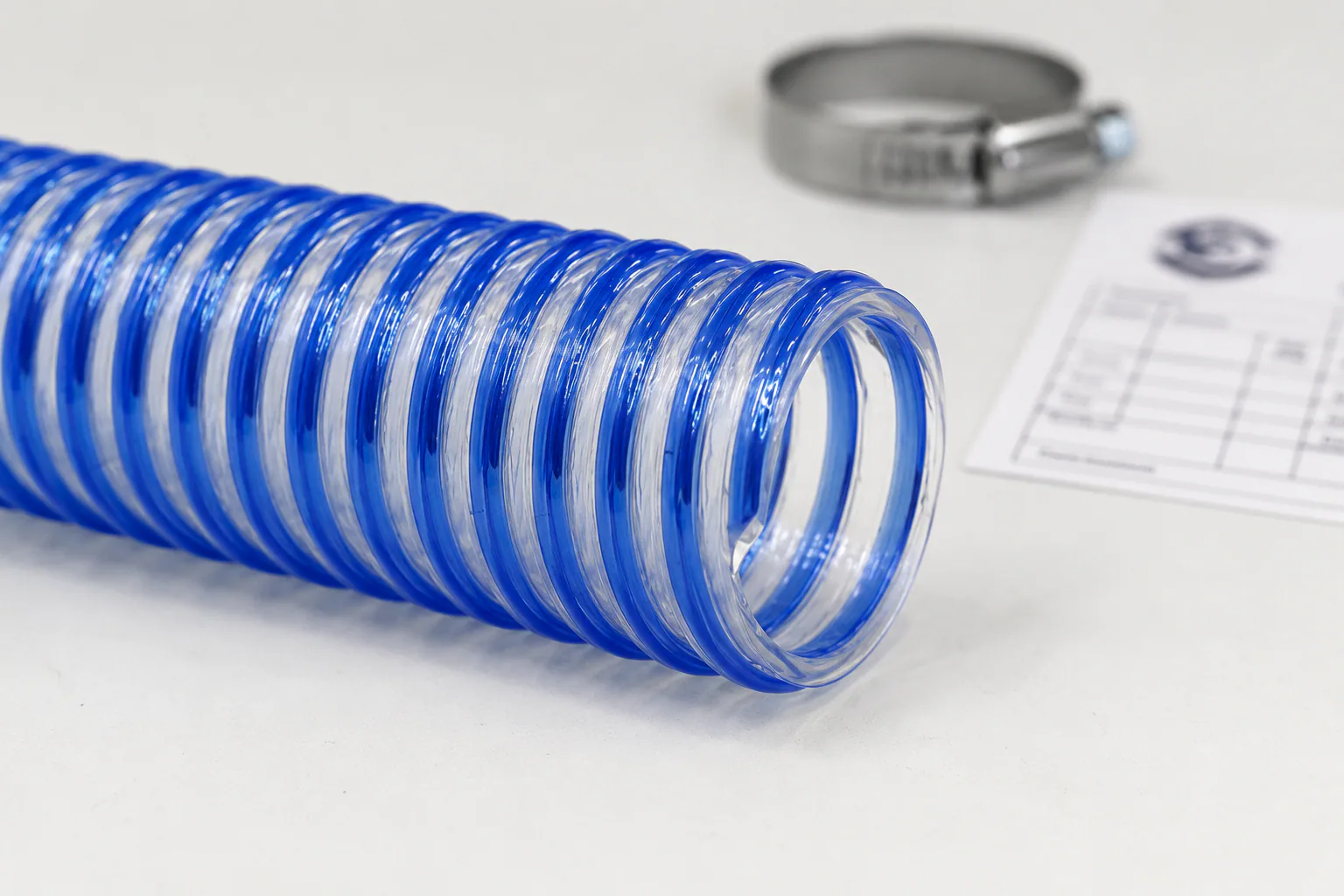
Spiral hose It is not enough to look only at the diameter of the connection port when choosing one. The length of the suction line, the flow rate of the pump, the quality of the fluid, the vacuum level and the bend radius of the hose should be evaluated together.
Explore the relevant options: Compare spiral hose models · Open the flow and pipe-diameter calculator
Where to start when choosing diameter?
The first reference is the pump manufacturer's suction port. Unnecessary constriction in the suction line can increase flow rate and losses; Unnecessarily large diameter increases connection, weight and cost. Pump nozzle, target flow rate, line length and level difference should be considered in the same table. If reduction is required, appropriate connection geometry should be used instead of sudden narrowing.
Vacuum in the suction line and risk of crushing
Suction hoseIt must be able to maintain its form against external pressure. The pitch of the spiral reinforcement, wall thickness and material hardness are important at this point. Sharp turning, hot environment and long-term vacuum can flatten the hose. The permissible vacuum, operating temperature and minimum bending radius should be checked together in the product technical table.
Transparent, yellow and heavy duty series
Transparent spiral hose It offers the advantage of observing the flow. Yellow or green absorbent series can be preferred for visibility and mechanical strength in agricultural and pump applications. Heavy duty selection should not be made based on color alone; inner diameter, wall thickness, spiral structure, weight and usage temperature should be compared.
Correct installation checklist
The hose should fit axially to the pump nozzle, the clamp should be wide enough not to cut the hose, and there should be no air leakage in the suction line. The line should be as short as possible, widely curved and supported without being crushed. At first start-up, connections, vibration, constriction and leakage should be visually checked.
What information should be shared when placing an order?
To recommend a suitable series, specify the medium—water, muddy water, air, granules or another substance—together with the pump inlet diameter, target flow, total line length, vertical suction lift and operating temperature. For mobile pumps, frequent handling, the risk of vehicles passing over the hose and outdoor UV exposure also matter. When requesting a price per metre, include the coil length and required fittings.
If the existing hose is being replaced, the size of the connection port, the inner diameter of the hose and a photo of the open mouth should be shared instead of just measuring the outer diameter of the old hose. The terms inch and millimeter can be confused between product families. For this reason, the caliper or meter must be legible in the measurement photograph; However, the technical decision must be verified with the current product table.
Initial commissioning and periodic check
After installation, the pump should be started at low load and contraction, vibration, air intake and connection movement along the hose should be observed. If there is a cut under the clamp, a crack on the spiral, or friction on sharp surfaces, the system should be stopped. During periodic control, hardening of the hose, color change, permanent flattening and deformation in the end areas should be recorded. Maintenance and renewal intervals should be determined by authorized technical personnel according to the risk of the application.
Related products and technical guides
Frequently Asked Questions
Should the pump suction hose be chosen smaller than the pump mouth?
Choosing a smaller diameter without manufacturer data is not recommended; may increase the risk of contraction losses and cavitation. Verify selection by considering pump port, inside diameter, line length, vacuum, temperature and bend radius.
Why does the spiral hose flatten in vacuum?
Insufficient spiral reinforcement, high temperature, sharp bends or vacuum higher than the product allows can cause flattening. Verify selection by considering pump port, inside diameter, line length, vacuum, temperature and bend radius.
How many inches of water absorbing spiral hose should be chosen?
Pump suction port, target flow rate, line length and elevation difference should be evaluated together; However, a fixed diameter cannot be selected based on the name of use. Verify selection by considering pump port, inside diameter, line length, vacuum, temperature and bend radius.
What is the difference between transparent spiral hose and yellow suction hose?
Transparent serial makes it easy to see the flow; The yellow and heavy duty series may have different mechanical uses. The exact comparison should be made on the technical chart. Verify selection by considering pump port, inside diameter, line length, vacuum, temperature and bend radius.
What happens if the spiral hose gets air in the pump suction?
Air leakage can reduce the efficiency of the pump, disrupt suction and cause irregular operation. Glands and clamps should be checked. Verify selection by considering pump port, inside diameter, line length, vacuum, temperature and bend radius.
Why does the vacuum hose collapse inwards?
Higher than permitted vacuum, temperature, sharp bends or insufficient spiral reinforcement may cause the hose to collapse. Verify selection by considering pump port, inside diameter, line length, vacuum, temperature and bend radius.
Why is spiral hose bend radius important?
Below the minimum value, sharp bending can constrict the flow, strain the spiral structure and reduce the service life. Verify selection by considering pump port, inside diameter, line length, vacuum, temperature and bend radius.
How does the spiral hose meter price compare?
The price per meter should not be compared without equalizing the inner diameter, wall thickness, weight, spiral structure, roll length and usage class. Verify selection by considering pump port, inside diameter, line length, vacuum, temperature and bend radius.
Is the vacuum truck suction hose the same as the standard suction hose?
They are often not the same class of use; Diameter, spiral structure, vacuum and wear conditions should be evaluated separately with technical data. Verify selection by considering pump port, inside diameter, line length, vacuum, temperature and bend radius.
What happens if the pump suction hose is long?
As the line gets longer, friction loss and the possibility of air leakage may increase. The suction line should be as short as possible, widely curved and installed in accordance with the pump manufacturer's limits. Verify selection by considering pump port, inside diameter, line length, vacuum, temperature and bend radius.
How to measure the inner diameter of spiral hose?
The hose mouth is measured from the inside with a caliper without being crushed. The inch equivalent should not be estimated; The measurement should be compared with the nominal inner diameter in the product technical chart. Verify selection by considering pump port, inside diameter, line length, vacuum, temperature and bend radius.
How to choose hose clamp on pump suction?
The clamp diameter must be compatible with the hose and fitting, it must be tightened to a sufficient width and it must not cut the spiral body. In critical suction lines, appropriate fittings and the fixing method recommended by the manufacturer should be used.
Can the spiral hose be used in hot water?
Not every PVC spiral hose is suitable for hot water. Continuous and short-term temperature limit should be verified in the product table; It should be noted that softening and vacuum resistance may change as the temperature increases.
Can the transparent spiral hose be used for food?
Transparent appearance alone does not mean food suitability. The material conformity certificate of the relevant product, the type of food to be transported, the temperature and the cleaning method must be verified with the manufacturer. Verify selection by considering pump port, inside diameter, line length, vacuum, temperature and bend radius.
Can the spiral hose be used outdoors in the sun?
UV contribution and outdoor suitability vary depending on the product. Hardening, color change and cracks should be checked regularly during long-term sun exposure. Verify selection by considering pump port, inside diameter, line length, vacuum, temperature and bend radius.
To which side of the pump is the suction hose connected?
Suction hose is used on the inlet side of the pump; The pressure requirements of the outlet side may require a different product class. Suction and discharge line hoses should be selected separately according to their functions. Verify selection by considering pump port, inside diameter, line length, vacuum, temperature and bend radius.
Why is the open mouth section checked in a spiral hose?
Section; It provides direct information about inner diameter, wall thickness and spiral placement. The mass delivery can be compared with the cross-section of the reference sample before ordering. Verify selection by considering pump port, inside diameter, line length, vacuum, temperature and bend radius.
What information is required when ordering wholesale spiral hose?
Model, inner diameter, roll length, total length, usage fluid, temperature, vacuum/pressure condition and delivery province should be shared. This prevents mixing of different technical classes based on price alone.
Let's Choose the Right Product Together
Share application, diameter, length and delivery information.