PE100 Pipe: A Guide to SDR, PN and ATÜ Selection
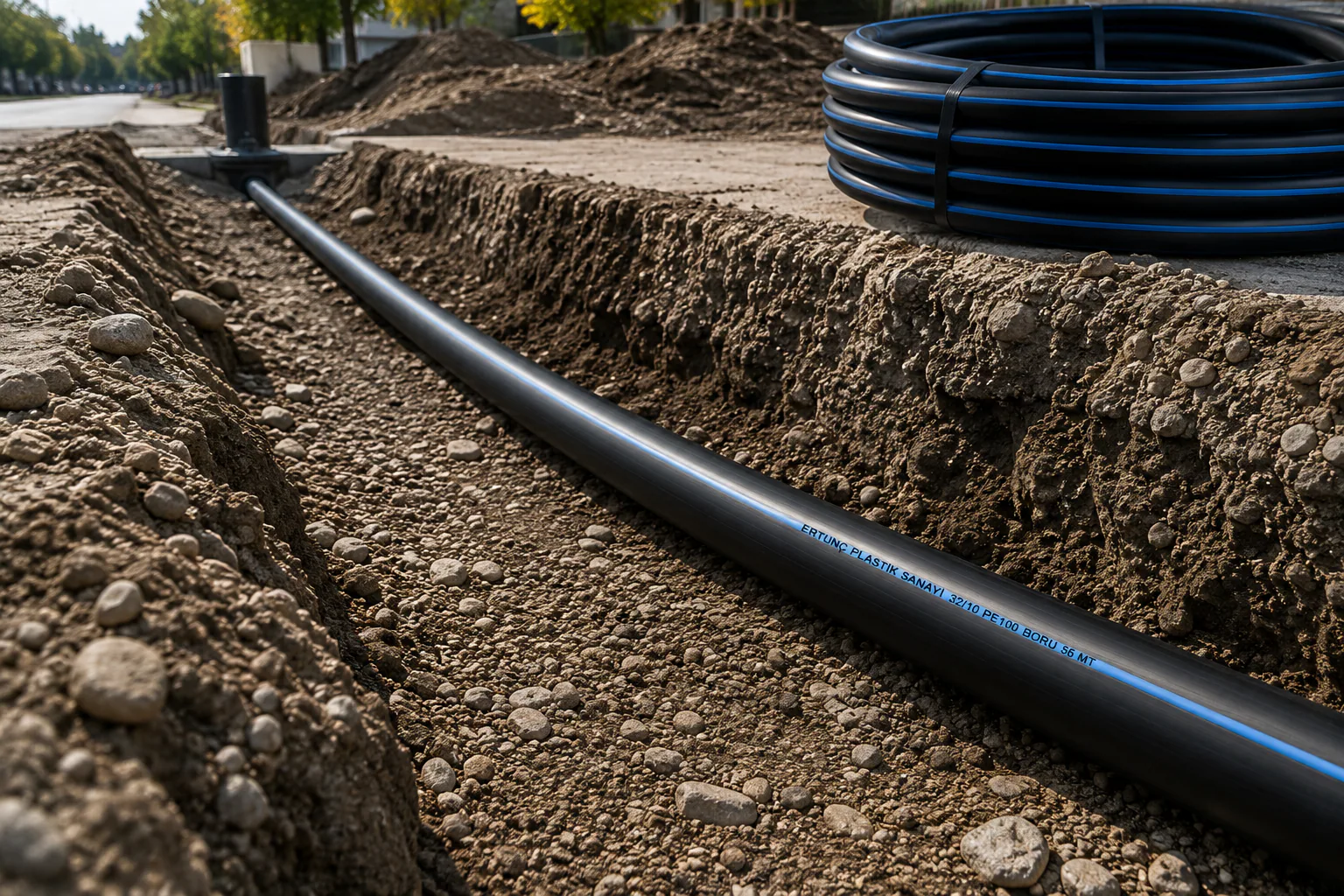
PE100 pipe selection requires more than the outside diameter. SDR class, wall thickness, nominal pressure, operating temperature and connection method must be considered together.
Explore the relevant options: PE100 Polyethylene Pipe · PE 100 and PE 32: A Pipe Selection Guide in 5 Topics
What does SDR mean?
SDR is the ratio of nominal outside diameter to nominal wall thickness. At the same outside diameter, a lower SDR generally means a thicker wall. This relationship alone does not establish a permissible site pressure; material class and the standard’s design conditions must also be considered.
How should PN and ATÜ be read?
PN denotes a nominal pressure class. ATÜ is also used in local trade descriptions, but a similar name is not enough to establish equivalence. Check the manufacturer’s technical table, applicable standard, diameter and wall thickness when ordering. Higher temperatures may require a reduction in the permitted operating pressure.
PE32 and PE100 are not the same thing
When the material class changes, the design required for the same diameter and use may differ. When enlarging an existing line or replacing parts, outer diameter matching alone is not enough. The marking on the pipe, material class, production standard and connection equipment should be checked together.
Connections and Site Checks
For small-diameter pipe, polyethylene pipemechanical couplings, electrofusion or butt fusion may be used as specified by the project. Cut the pipe end square, check ovality and surface damage, and follow the fitting manufacturer’s installation steps. Before backfilling, carry out the pressure test required by the project and applicable technical specification.
What should be included in the offer and order document
“32 mm PE pipe” alone is not a complete order specification. State the outside diameter, material class, SDR or wall thickness, nominal pressure class, coil length, colour, connection method and intended use together. For drinking-water and specified project applications, ask the supplier to verify the applicable standard, current conformity documents and traceability. Do not assume a product has a property simply because it appears in a quote.
Polyethylene pipetransport and storage requirements should also be included in the delivery specification. Avoid crushing caused by sharp edges or unsuitable straps, and protect open ends from contamination. Follow the manufacturer’s instructions on storage duration and sun exposure. On receipt, compare pipe markings, outside diameter, surface condition, ovality and coil length with the order.
Why does project pressure require expert calculation?
Static pressure, pump pressure, elevation difference, valve movements and water hammer can create different loads on the same line. Nominal class selection should not be based solely on a single value seen on the manometer. Temperature, service time, connection type and safety coefficient should be evaluated according to project conditions. Hydraulic calculation, pressure testing and commissioning operations in critical and buried lines must be carried out under the relevant technical specifications and under the supervision of an authorized expert.
Related products and technical guides
Frequently Asked Questions
As the SDR value decreases, does the pipe become thicker?
For the same outside diameter and material class comparison, nominal wall thickness generally increases as SDR decreases. Verify final value from current manufacturer/standard table including diameter, SDR, wall thickness, temperature and project pressure.
Is the PN value the real working pressure?
PN is a nominal class; The actual design must be verified based on temperature, time, impact and project conditions. Verify final value from current manufacturer/standard table including diameter, SDR, wall thickness, temperature and project pressure.
What does SDR mean in PE100 pipe?
SDR is the classification that expresses the ratio of nominal outer diameter to nominal wall thickness. Verify final value from current manufacturer/standard table including diameter, SDR, wall thickness, temperature and project pressure.
What is the difference between SDR 11 and SDR 17?
For the same outer diameter and material, different SDR classes correspond to different wall thicknesses; nominal pressure and project conditions must be verified from the technical table. Verify final value from current manufacturer/standard table including diameter, SDR, wall thickness, temperature and project pressure.
How is the PN10 class described in ATÜ trade terminology for PE100 pipe?
Trade terminology can be inconsistent, so do not rely on matching names alone. Use the manufacturer’s PN, SDR, diameter and wall-thickness table. Confirm the final specification against current product or standard data that also covers temperature and project pressure.
What is the main difference between PE100 and PE32 pipe?
Material class and design strength are different; Same diameter does not mean that two products have the same pressure performance. Verify final value from current manufacturer/standard table including diameter, SDR, wall thickness, temperature and project pressure.
What should be the wall thickness of the 32 mm PE100 pipe?
Wall thickness depends on the selected SDR/PN class; Instead of a single fixed value, the current product and standard table should be checked. Verify final value from current manufacturer/standard table including diameter, SDR, wall thickness, temperature and project pressure.
Are blue polyethylene pipes and black polyethylene pipes the same?
Color alone does not prove material or pressure class; The print, technical documentation and intended use must be verified together. Verify final value from current manufacturer/standard table including diameter, SDR, wall thickness, temperature and project pressure.
Is PE pipe connected by coupling or by welding?
Depending on diameter, pressure class and project requirements, PE pipe can use mechanical couplings, electrofusion or butt fusion. Verify the specification against current manufacturer or standard data covering diameter, SDR, wall thickness, temperature and project pressure.
Is PE100 pipe diameter measured from the inside or outside?
PE pipes are usually identified by their nominal outside diameter. Since the inner diameter of the passage varies according to the wall thickness and SDR class, the outer diameter should not be used alone in the project calculation. Verify final value from current manufacturer/standard table including diameter, SDR, wall thickness, temperature and project pressure.
What happens to the wall thickness as SDR increases?
As the SDR value increases for the same outside diameter and material class, the nominal wall thickness generally decreases. The pressure class decision should be made with the current standard and manufacturer's table. Verify final value from current manufacturer/standard table including diameter, SDR, wall thickness, temperature and project pressure.
Can the PE100 pipe be used in drinking water?
Only products whose suitability for the relevant use has been documented should be selected. Material, production standard, hygiene suitability and project conditions must be verified through supplier documents. Verify final value from current manufacturer/standard table including diameter, SDR, wall thickness, temperature and project pressure.
What coil lengths are available for PE100 pipe?
Coil length may vary depending on diameter, SDR class and manufacturer program. Nominal length, tolerance, packaging and shipping method must be clearly written in the order. Verify final value from current manufacturer/standard table including diameter, SDR, wall thickness, temperature and project pressure.
Can PE pipe be stored in the sun?
Storage time and UV strength depend on the manufacturer's instructions. The coil must be protected from excessive heat, sharp surfaces and stacks that will cause deformation. Verify final value from current manufacturer/standard table including diameter, SDR, wall thickness, temperature and project pressure.
Why is water hammer important in a PE100 pipe?
Valve closure and pump operation can cause short pressure surges. A specialist should check the design for transient conditions as well as normal operating pressure.
How to do PE pipe pressure testing?
Test pressure, duration, filling and safety steps are determined according to the relevant project specifications. Pre-burial testing must be recorded by the authorized technical team. Verify final value from current manufacturer/standard table including diameter, SDR, wall thickness, temperature and project pressure.
Does PE pipe ovalization affect the connection?
Excessive ovalization can make coupling or weld preparation difficult and affect sealing. The pipe end should be measured before connection and appropriate correction equipment should be used if necessary. Verify final value from current manufacturer/standard table including diameter, SDR, wall thickness, temperature and project pressure.
Why does the PE100 pipe price vary depending on the SDR class?
Wall thickness, weight per metre, material quantity, diameter, coil length and logistics affect the price. Compare quotes for the same outside diameter only after checking that their technical classes match.
Let's Choose the Right Product Together
Share application, diameter, length and delivery information.