Why Does Air Enter a Pump Suction Line? Understanding Cavitation
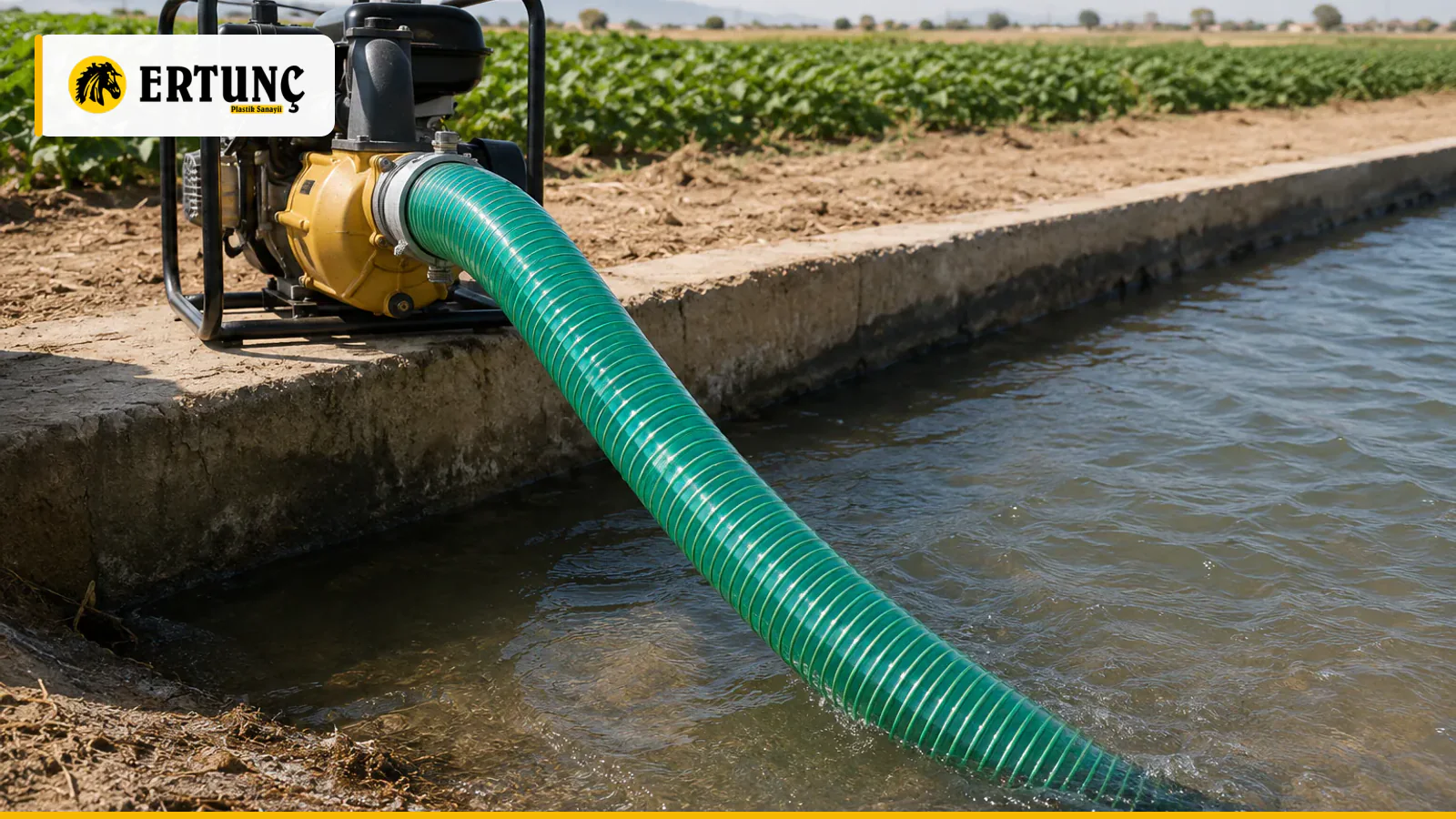
Delay in the pump taking in water, fluctuations in the flow rate, seeing foam in the hose or hearing a noise similar to gravel may be signs of air leakage or cavitation in the suction line. Although two problems may seem similar, the cause and solution are not the same. Continuing to run the pump dry or with severe vibration can cause serious damage.
Explore the relevant options: Compare spiral hose models · When Should a Suction Hose Be Replaced?
Difference between air leakage and cavitation
In case of air leakage, air from outside enters the system through a loose connection, cracked hose, gasket or flap in the suction line. In cavitation, as the pressure at the pump inlet drops excessively, vapor bubbles form in the liquid and collapse inside the pump.
| Symptom | Possibility of air leak | Possibility of cavitation |
|---|---|---|
| Bubbles in a transparent suction line | High | Possible |
| Pump leaking water | High | Lower |
| Pebble/stone sound | Possible | High |
| Flow fluctuation | High | High |
| Flattening of the suction hose | Low | Suction restriction indicator |
8 Causes of Air in a Pump Suction Line
- Loose or incorrect diameter clamp
- Missing, hardened or cut union gasket
- Crack and spiral separation at the end of the hose
- Foot valve or check valve leaking
- Not filling the pump body and suction line completely
- Water level falling below the suction port
- Sharp bend or hose flattening in vacuum
- Clogging of the filter, strainer or suction nozzle
Why is suction hose diameter critical?
Narrow suction line can increase flow rate and loss. Long line, high suction distance and multiple connections reduce the usable pressure at the pump inlet. Randomly making the pump suction port smaller may increase the risk of cavitation.
For diameter selection, the pump manufacturer's curve, suction port, target flow rate, vertical suction height and fluid properties should be evaluated together. spiral hose diameter selection and pump guide Compares product lines.
Why does the hose collapse in vacuum?
Insufficient spiral reinforcement, higher than permitted vacuum, temperature, sharp bending or crushing of the hose may cause implosion. The flattened cross section further narrows the flow and the problem magnifies itself.
In practice standard green suction hose with heavy green suction hose It should not be compared based on color alone. Inner diameter, wall thickness, spiral structure, temperature and current technical data should be taken as basis.
Safe Inspection Sequence
- Stop the pump and disconnect power safely.
- Check the water level and whether the suction port is completely submerged.
- Inspect the hose for cracks, flattening and sharp bends.
- Check the clamp, fitting, gasket, valve and filter in order.
- Fill the pump with water according to the manufacturer's instructions.
- Observe bubbles, vibration, noise and flow during short-term testing.
- If the problem persists, contact technical service for the pump curve and condition NPSH.
What information should be shared when placing an order?
Pump brand-model, suction port size, target flow rate, vertical suction height, total hose length, quality of the fluid, operating temperature and mobile/fixed usage information should be provided. Muddy or particulate water may not require the same product selection as clear water.
yellow suction hose, heavy duty series and vacuum truck suction hose It serves different purposes. The exact product class must be verified by written technical scope.
Related products, dimensions and technical guides
Frequently Asked Questions
Why Does the Pump Suction Line Make Air? We answered 18 questions, which are frequently asked on Google about cavitation, with product and application details.
Why does the pump suction line create air?
Loose clamp, cracked hose, broken gasket, leaky valve, low water level or incomplete initial filling may cause air to enter the system.
What happens if the pump releases air?
The flow rate may decrease, the pump may receive water late, operation may fluctuate and there may be a risk of dry running. Do not operate for a long period of time until the problem is resolved.
How to understand cavitation sound?
Sound, vibration and flow rate decrease may be observed as if gravel or stones are rotating inside the pump. Definitive diagnosis must be made by the technical service.
Are air leaks and cavitation the same?
No. In air leakage, gas enters from outside; In cavitation, vapor bubbles form in the liquid due to low inlet pressure.
Why does the suction tube become flat?
High vacuum, temperature, sharp bends, crushing or insufficient spiral reinforcement may collapse the hose.
How many inches should the pump suction hose be?
Pump nozzle, target flow rate, line length and suction height are calculated together. Fixed inches cannot be selected based on pump power alone.
Is it right to make the pump inlet smaller?
Tightening without manufacturer approval may increase suction loss and the risk of cavitation. The pump manual should be taken as basis.
If the foot valve is broken, will the pump release air?
A leaky bottom valve may cause the water in the line to leak back and the pump to re-introduce air at every start-up.
Are two clamps used on the suction line?
The connection is based on the manufacturer's recommendation and hose structure. Excessive or incorrectly positioned clamps can cut the hose.
Does the transparent spiral hose indicate air leakage?
Transparent line can make it easy to observe bubbles; However, it alone does not confirm the location of the leak and cavitation.
Why does the pump draw water late?
It may be caused by incomplete filling, long/high suction line, air leak, clogged filter, low water level or pump wear.
What happens as the pump suction height increases?
The available pressure at the pump inlet decreases; The flow rate may decrease and the risk of cavitation may increase. The manufacturer's limit must not be exceeded.
If the suction hose is long, will the flow rate decrease?
Yes. Length increases friction loss. Unnecessary length and narrow connections should be reduced.
If the pump filter is clogged, will it cause cavitation?
A clogged strainer may increase suction resistance, reduce inlet pressure, and cause cavitation-like symptoms.
What happens if the pump runs dry?
The seal, bearing and pump casing may be damaged. The pump should not be operated without filling according to the manufacturer's instructions.
What is the difference between yellow and green suction hose?
Color alone does not determine technical class. Internal diameter, grammage, spiral, wall thickness, vacuum and temperature data should be compared.
Can the vacuum truck suction hose be used for pump suction?
The fluid, vacuum, wear and connection conditions of the application may differ. Technical suitability must be verified in writing.
What should I write when getting a quote for a pump suction line?
Share pump model, port size, target flow rate, suction height, hose length, fluid, temperature and frequency of use.
Related Products and Sizes
Jump directly to the relevant product family, measurement sheets and complementary technical guides.
Let's Choose the Right Product Together
Share application, diameter, length and delivery information.