Pump Connections
Submersible pump running but delivering little water: what to check

The pump sounds normal, but the tank takes longer to fill. Before buying a bigger pump or a wider hose, identify where the water travels and when the change in flow began.
Quick answer
Start with the accessible discharge line: look for kinks, crushed sections, leaks and narrow fittings. If the line was extended, review both its length and elevation change. Flow that drops after a period of operation also calls for checks of the water level and pump conditions. Replacing a hose will not solve every low-flow problem.
Symptoms and checks
| What changed? | First place to look | Next step |
|---|---|---|
| Flow fell after fitting a new hose | Actual hose bore, fitting passage and bends | Compare the old and new component dimensions. |
| Flow fell after extending the line or moving the tank | Total route length and elevation difference | Review the line calculation with the pump curve. |
| Good flow at first, then weaker flow | Water level, interruptions and protection alerts | Record the running time and contact the well/pump service provider. |
| Wet patches around joints | Accessible connections and hose wall | Isolate power and release pressure before addressing the leak. |
| No line changes, but a gradual decline | Possible screen, valve or internal deposits | Have inaccessible components checked by a qualified service provider. |
Establish when the problem began
Record three things: when the flow changed, which component changed at that time, and whether the problem is constant or develops during a run. An immediate drop after a new connection calls for a different starting point from a decline over several months.
This guide covers a submersible pump’s discharge line. Do not confuse it with air entering the suction line of a surface pump. Before opening a connection, stop the pump, safely isolate its power and release line pressure. Do not open electrical panels or enter a well.
Is the hose kinked, crushed or under tension?
Follow the accessible line from end to end. Check doorways, stone edges, tank inlets and sharp turns. A tight unreleased coil, a sudden bend or a load across the hose can distort its round passage.
With the pump off, arrange a suitable route without forcing the hose. Permanent flattening, cracks or damaged reinforcement require an assessment of the affected section. Do not tape over damage and test it under pressure. Confirm the permitted bend radius and pressure duty from the product’s technical information.
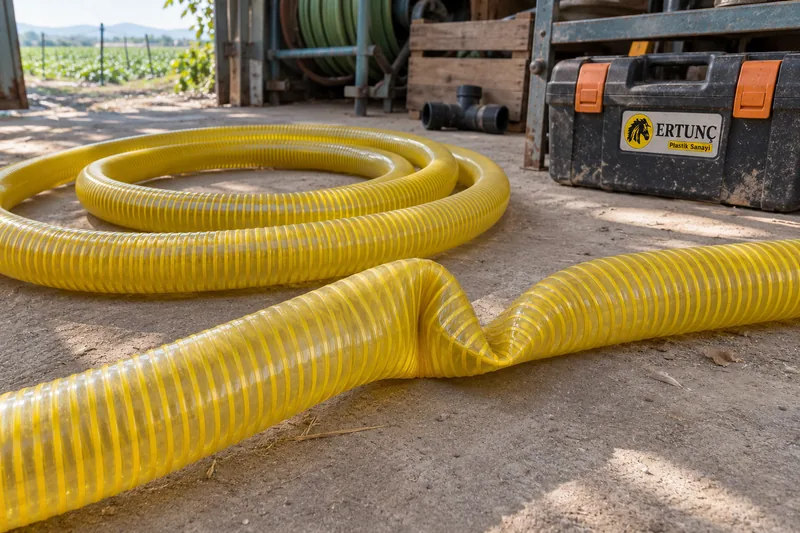
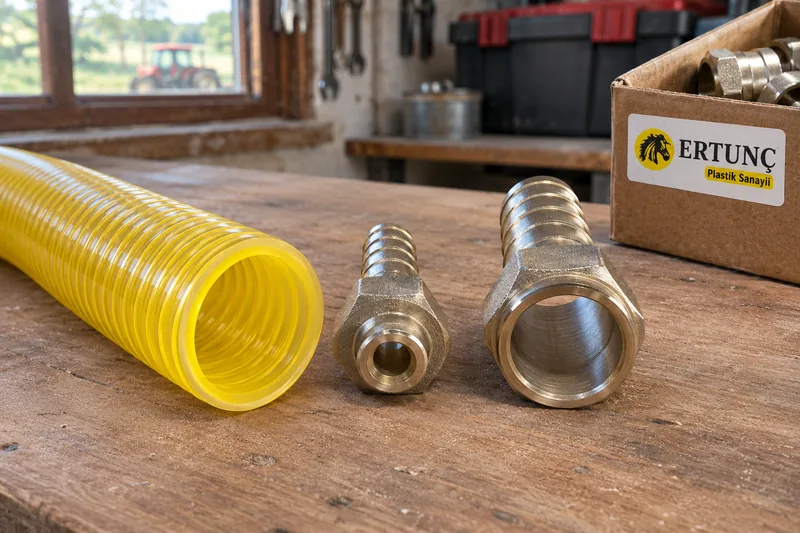
Do the outlet, fitting and hose dimensions mean the same thing?
A pump’s thread size, a hose’s inside diameter and a water pipe’s outside diameter are different measurements. Matching numbers on two labels do not prove that the parts fit together. Check the hose bore, hose tail and any reducers as a complete connection.
A small-bore adapter or partly closed valve can restrict the line ahead of a wide hose. Do not change valve settings against the pump manufacturer’s instructions. The pump outlet and hose inside-diameter guide explains the connection choices in more detail.
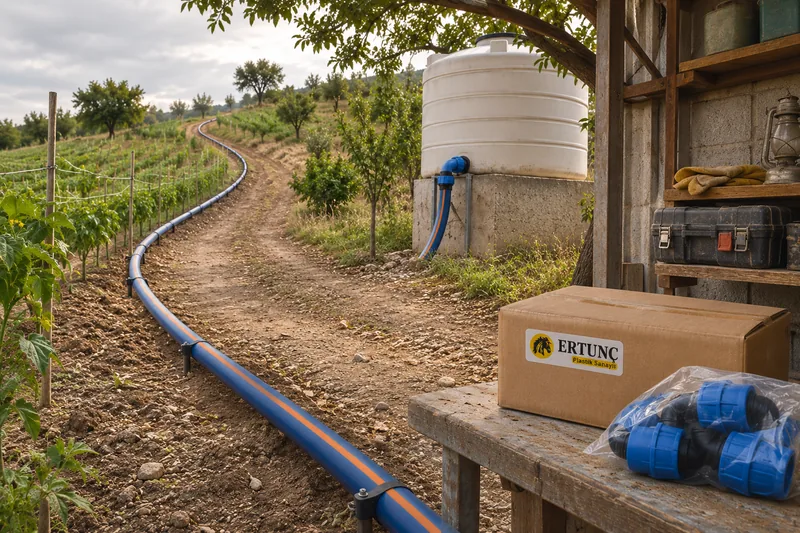
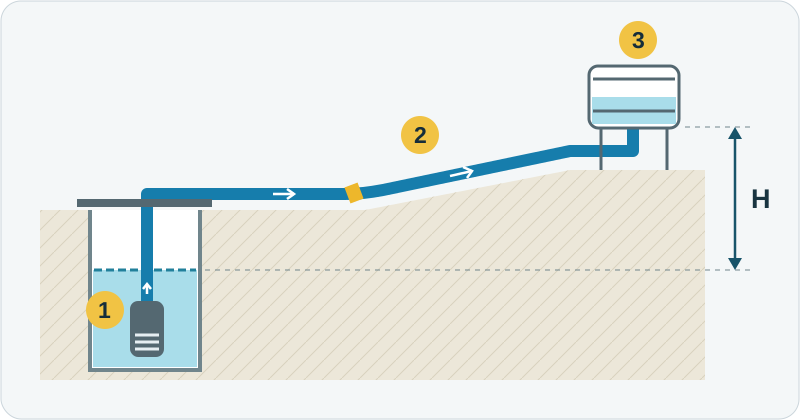
Consider line length and elevation together
The same pump can deliver different flow through different routes. Friction occurs along the pipe or hose, with additional losses at elbows, valves and fittings. A narrow passage can cause greater losses, particularly as the required flow increases.
If a tank has moved farther away, record more than the extra pipe length. Establish the height difference between the delivery point and the water level while pumping. Maximum pump head does not mean the pump will provide the desired flow at that height. Read the model’s performance curve and permitted operating range together.
For distribution after the wellhead, compare the 32/10 blue water pipe and 40/10 blue water pipe. Review required flow, actual bore, route conditions and fittings before choosing a size. Do not assume these distribution products are suitable as load-bearing riser pipes inside a borehole.
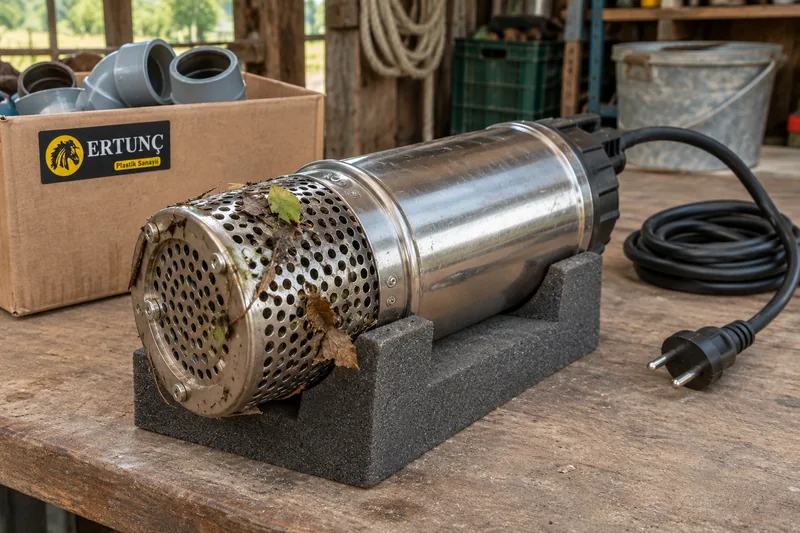
If the hose looks sound, check the water source and pump
Flow that starts well and later weakens does not by itself identify a hose fault. Falling pumping water level, a partly obstructed screen or check valve, deposits and pump condition are other possibilities. Sound alone is not a diagnosis.
Follow the model’s maintenance instructions for a safely accessible external screen. Never pull a pump from a well by its power cable or discharge hose. In-well work, electrical measurements and removal of the pump or check valve belong with qualified service personnel. If there is no water or protection repeatedly trips, do not keep restarting the pump.
What information helps select a hose or pipe?
Instead of requesting only a “2-inch pump hose”, include this short checklist:
- Pump make/model and outlet connection size.
- Required flow or the current tank filling time.
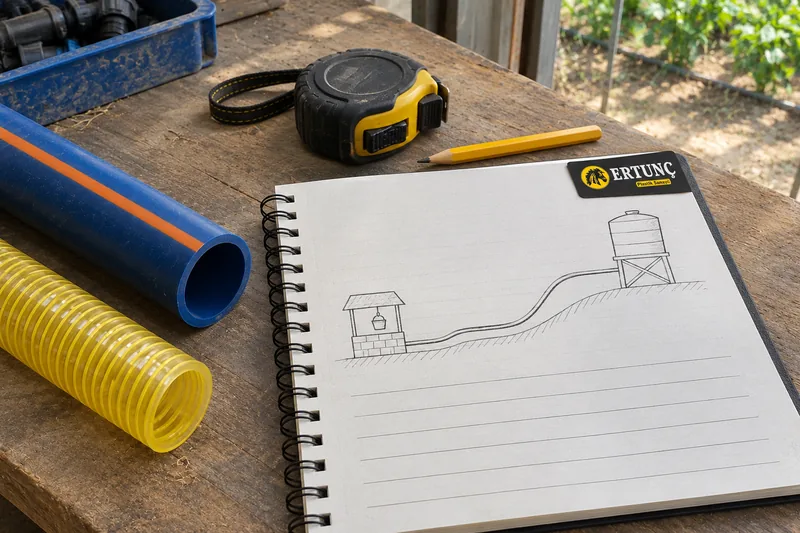
- Total route length, elevation change and a simple sketch.
- Existing hose inside diameter or pipe outside diameter and markings.
- Elbows, valves, check valves and reducers; photographs of visible damage.
- Water characteristics, operating conditions and total length needed.
Review the selection points on the submersible pump hose application page. Colour alone does not establish pressure rating or suitability. Packaging length also differs from a continuous installed run: a 25+25 metre pack is two sections, so any required joining connection must be planned separately.
If the hose separates from its fitting, first review Why does a pump hose keep coming off? Check the fitting and clamp.
Related products
32 mm · 10 ATÜ Blue Polyethylene Pipe
Review dimensions and list information for distribution after the wellhead; confirm selection with the line calculation.
40 mm · 10 ATÜ Blue Polyethylene Pipe
Compare with the 32 mm option using actual bore, fittings and total line requirements.
2″ Standard Yellow Suction Hose
Review available hose sizes and separately confirm pressure suitability for the discharge duty.
Frequently asked questions
Can a longer submersible pump hose reduce flow?
A longer line can increase friction losses and reduce operating flow. The effect depends on bore, required flow, elevation and the pump curve; length alone cannot give a fixed loss figure.
Does a 2-inch pump outlet always need a 2-inch hose?
Check the outlet thread size separately from the hose inside diameter. The fitting, pressure duty, required flow and route length all matter; a shared inch label is not enough.
Will replacing 32 mm pipe with 40 mm pipe definitely solve low flow?
No. A larger bore may help where line friction is the main limitation, but a low water level, blockage or pump fault still needs its own remedy.
Should I leave a noisy pump running if no water comes out?
No. Stop it and follow the manufacturer’s instructions. Check water level, protection alerts and the accessible discharge line, then seek service if needed. Do not repeatedly run the pump dry.
Two related guides
Pump outlet and hose bore compatibility
Understand the difference between thread, hose tail and hose diameter.
Air and cavitation in a pump suction line
Distinguish surface-pump suction problems from submersible-pump discharge problems.
Request a quote with your product and size
Include the product size, coil count, line length and delivery location so we can review a suitable option.
Send your quote requirements